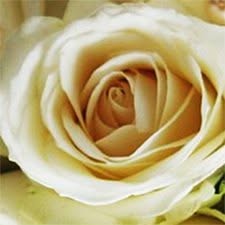
The “Festival of the Rose” is traditionally celebrated worldwide by the Rosicrucians on “Day C.” Where does this tradition come from, and what is the significance of the festival and “Day C”?
The Third Agreement, as stated in the “Fama Fraternitatis” (1614), the first of the three manifestos with which the Rosicrucians made their public debut in the early 17th century, reads:
“Every brother shall report to the Holy Spirit on Day C each year, or send word of the reason for his absence.”
It is extremely enlightening and worthwhile to take a closer look at this Third Agreement—that is, to withdraw into silence, meditate on it, and contemplate it.
Especially in today’s world, it is urgently necessary to make the Rosicrucians’ secret treasure of wisdom accessible to the public.
To this end, let us take a closer look at the aforementioned third agreement. It speaks of a “C” day and “S. Spiritus,” on which every brother is to report annually. One must remember that the Brotherhood positioned itself “contra Roma”—against the abuses of the Church and the prevailing academic scholarship. Since this was extremely dangerous at the time (heretics!), they encoded their wisdom in alchemical, hermetic, and kabbalistic terms, which scholars of that era used to communicate with one another.
The greatest heresy of the Rosicrucians and other free thinkers was that they contested the singular, historically valid image of Jesus Christ taught by the Church.
The core of the Rosicrucian myth is that Christ, the archetype, the perfect human who knows that he is ONE with the Father, is inherent in every human being as a divine spark.
The divine spark within humanity is symbolized (in the Rosicrucian tradition) by the rosebud that blooms at the intersection, at the heart, of the golden cross. The golden cross is a symbol of the purified, perfected human body.
Only a few people manage to set out on this path toward this lofty goal and persevere despite all the challenges of daily life. The “Fama” is a tried-and-true guide once one learns to understand its coded, “secret” language.
May I succeed in translating the 3rd Agreement from the “Fama” into terms understandable today.
Meaning of “Day C”: This gathering of the Rosicrucians takes place 100 days after the spring equinox. This is no coincidence. The number “100” symbolizes a process of maturation in nature and the completion of a spiritual cycle.
It is certainly no coincidence that “Day C” points to the Catholic feast of “Corpus Christi,” which celebrates the presence of Christ in the Eucharist. This feast has been observed annually since the 13th century, 60 days after Easter, approximately 83–113 days after the spring equinox.
Since the Rosicrucians tend to identify with the Lutheran Church, which holds a contrasting view of the Eucharist, they celebrate the “Feast of the Rose” at this time, the blooming rose being a symbol of the awakening soul personality within the human being (the true self, Christ consciousness).
What, then, does “S. Spiritus” mean? It refers to a level of consciousness, also called the “Cosmic Sanctum, ” where the high energy vibrations of all brothers and sisters who are prepared for it unite.