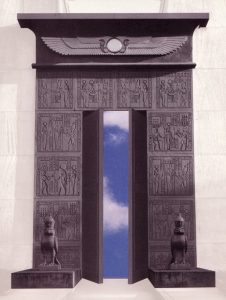
In the Rosicrucian tradition, the commitment to Ma’at (Cro Ma’at) is of great significance.
What exactly lies behind the commitment to Ma‘at?
It is said that the Rosicrucian is a walking question mark. Therefore, it is important for the student to explore this principle more closely. It is such a multifaceted principle that I can only touch on it briefly here and encourage everyone to delve into it themselves.
A good source is Jan Assmann’s book Ma’at.
In ancient Egypt, the divine principle of order known as Ma’at stood for truth, justice, divine social order, stability, and harmony. It was both a cosmogonic principle and an ethical concept.
Ma’at was defined in an Egyptian text as “that which ensures the good is rewarded and the evil is punished.”
A person’s success would require them to live harmoniously, in accordance with the divine order of Ma’at and in harmony with nature and society.
Ma’at encourages people to strive for perfection and excellence until they are free of error.
This order of Ma’at held sway in Egypt for 2,000 years. When it was lost, life became meaningless, with all the dire consequences: inefficient administration, indifference, irresponsibility, dishonesty, a lack of civic spirit, and a lack of personal integrity.
On its journey through Greece and Rome, the principle of Ma’at also influenced and shaped our legal history.
And it is worth devoting every effort and care to thinking deeply about the extent to which the revival and commitment to “Cro Ma‘at” is necessary today. Not only in the life of every Rosicrucian, but also as a healing contribution to today’s social problems and crises.